Leaving the lecture hall unnoticed: tips for a discreet exit during a lecture
Discover the art of slipping away gracefully and avoid curious looks: tips for discreet moments in the lecture hall!
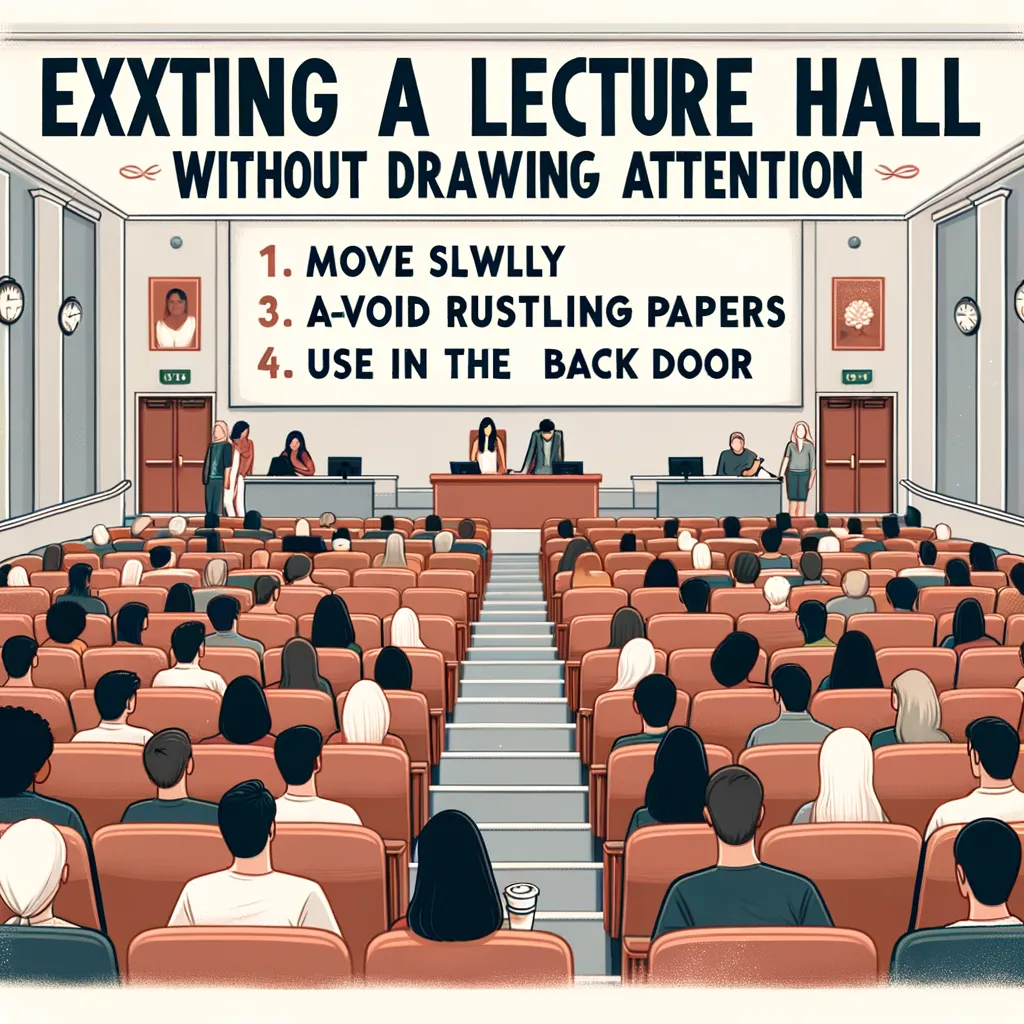
Leaving the lecture hall and the prof stops talking: how do you disappear unnoticed? 🎓
For many students it’s part of the deal: sneaking out of the lecture hall in the middle of a lecture. But how do you leave without professors or fellow students reacting with irritation? Whether it’s an overcrowded lecture or you’re simply not interested in the topic, a graceful exit takes a certain finesse.
Pick the right moment
Disappearing unnoticed starts with the right timing. If you choose suitable moments, such as the switch between slides or a general discussion round, you can leave discreetly. Silences and pauses are less suitable moments, because they can draw attention to every movement.
A study by Smith et al. (2020) shows that students are most focused during the first and last 10 minutes of a lecture. The middle part is therefore often less attentive, which makes it ideal for leaving the lecture hall.
Choose the right seat
Where you sit plays a decisive role. If you position yourself strategically before the lecture starts, you reduce possible disruption. Seats near the exit or at the end of a row have advantages: you can leave quickly without disturbing lots of other people.
An article in the Journal of Research in Teaching confirms that students who sit at the edge are less distracted, which also makes a discreet exit easier.
Body language and posture
Body language plays an important part in leaving the lecture hall unnoticed. A confident but low-key posture helps you not to stand out. Respond to any looks with a friendly nod or smile, and avoid hasty movements.
According to Pease and Pease (2004), in their book “The Definitive Book of Body Language”, people read body signals intuitively – so if you stay relaxed, you’re less noticeable.
Reasons for a discreet exit
There are many reasons to leave the lecture hall quietly: urgent appointments, a sudden message, or the feeling that you can’t get anything useful out of the lecture anymore. A good example is so-called “Academic Buoyancy”, the ability to deal positively with everyday academic setbacks.
An article by Martin et al. (2013) shows that flexible, confident decisions can contribute to better academic performance.
The role of technology
Thanks to modern technology, lectures can often be followed online. With audio and video recordings, you stay up to date even when you’re not in the lecture hall. UVACollab is one example of a platform that gives students access to lecture materials.
An article in the Journal of College Science Teaching stresses that digital learning platforms are seen as a complement to being there in person, and that they make everyday studying more flexible.
Keep it respectful
Even if the goal is to slip away unnoticed, respect for the lecturer and your fellow students remains essential. A polite reason, like an urgent message, can make your respectful intent clear. An occasional glance at your phone to signal discretion can help too.
Conclusion: diplomacy and planning are key
Leaving a lecture unnoticed is an art that takes patience, planning and diplomacy. Every step – from choosing your seat to your body language to using digital tools – should be thought through. Respect and a positive attitude towards the academic environment should always come first.
When and how you leave the lecture hall is a personal decision for every student. But with the strategies above, you can turn your back on the lecture for a while without drawing everyone’s attention.